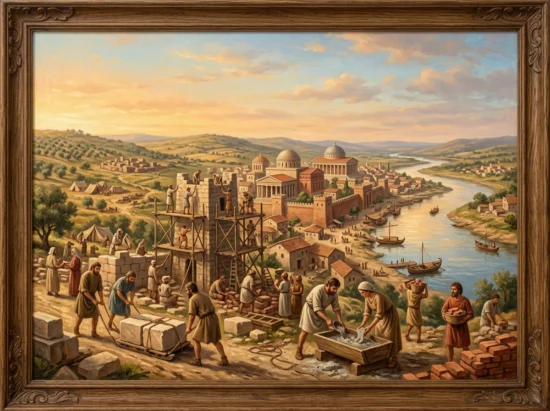
The Renaissance: A Cultural and Intellectual Revolution
The Renaissance, which spanned from the 14th to the 17th century, was a pivotal moment in European history. This period of significant cultural, artistic, scientific, and philosophical transformation had a profound impact on the continent, shaping the course of Western civilization. The Renaissance was a time of great upheaval and innovation, marked by the emergence of new ideas, the development of new technologies, and the creation of stunning works of art.
A New Era of Humanism
At the heart of the Renaissance was the concept of humanism. Humanists believed in the potential of human beings to achieve great things through education, reason, and individualism. This idea challenged the traditional Christian view of human nature, which saw humans as inherently flawed and in need of salvation. Humanists, on the other hand, saw humans as capable of achieving greatness through their own efforts.
The humanist movement was led by thinkers such as Petrarch, Boccaccio, and Bruni, who sought to revive the classical learning of ancient Greece and Rome. They believed that by studying the works of these ancient civilizations, they could gain a deeper understanding of the human condition and the potential for human achievement.
The Emergence of Artistic Genius
The Renaissance was also a time of great artistic innovation. Artists such as Leonardo da Vinci, Michelangelo, and Raphael created some of the most iconic works of art in history. These artists were not just skilled craftsmen, but also thinkers and intellectuals who were deeply interested in the human condition.
The art of the Renaissance was characterized by its use of perspective, which created a sense of depth and realism in paintings. Artists also began to experiment with new techniques, such as sfumato and chiaroscuro, which added a level of subtlety and nuance to their work.
The Scientific Revolution
The Renaissance was also a time of great scientific innovation. Thinkers such as Galileo, Copernicus, and Leonardo da Vinci challenged the traditional view of the universe, which saw the Earth as the center of creation. Instead, they proposed a heliocentric model of the universe, which placed the Sun at the center of the solar system.
The scientific method, which involved the use of observation, experimentation, and the formulation of hypotheses, was developed during this period. This method allowed scientists to make new discoveries and to develop a deeper understanding of the natural world.
The Impact of the Renaissance on European Society
The Renaissance had a profound impact on European society. The emergence of humanism and the development of new artistic and scientific ideas challenged traditional views of the world. The Renaissance also saw the rise of a new class of wealthy merchants and traders, who were able to patronize the arts and support the development of new ideas.
The Renaissance also saw the emergence of a new sense of national identity. As nations began to take shape, they developed a sense of pride and patriotism. This led to the development of new forms of literature and art, which celebrated the achievements of individual nations.
The Legacy of the Renaissance
The Renaissance had a lasting impact on European society. The ideas and innovations of this period shaped the course of Western civilization and continue to influence us today.
The Renaissance also saw the emergence of a new sense of individualism, which challenged traditional views of authority and power. This individualism has had a lasting impact on European society, shaping the course of modern politics and culture.
Conclusion
The Renaissance was a pivotal moment in European history. The emergence of humanism, the development of new artistic and scientific ideas, and the rise of a new class of wealthy merchants and traders all contributed to a profound transformation of the continent. The Renaissance had a lasting impact on European society, shaping the course of Western civilization and continuing to influence us today.
FAQ
What was the main cause of the Renaissance?
The main cause of the Renaissance was the emergence of humanism, which challenged traditional views of human nature and the potential for human achievement.
Who were the key figures of the Renaissance?
The key figures of the Renaissance included thinkers such as Petrarch, Boccaccio, and Bruni, who sought to revive the classical learning of ancient Greece and Rome. Artists such as Leonardo da Vinci, Michelangelo, and Raphael created some of the most iconic works of art in history.
What were the main innovations of the Renaissance?
The main innovations of the Renaissance included the development of new artistic techniques, such as perspective and sfumato, and the emergence of the scientific method, which allowed scientists to make new discoveries and develop a deeper understanding of the natural world.
How did the Renaissance impact European society?
The Renaissance had a profound impact on European society, challenging traditional views of human nature and the potential for human achievement. The emergence of humanism, the development of new artistic and scientific ideas, and the rise of a new class of wealthy merchants and traders all contributed to a profound transformation of the continent.
What was the legacy of the Renaissance?
The legacy of the Renaissance was a new sense of individualism, which challenged traditional views of authority and power. This individualism has had a lasting impact on European society, shaping the course of modern politics and culture.